
 I wasn’t looking forward to watching the final episode of my beloved Mad Men. Fortunately, “Person To Person” came through as a powerful, poignant and perfect finale. The genius of the series finale is, rather than definitively revealing where the characters have ended up, it leaves us anticipating where they are headed. Overall, the finale is about happy and hopeful anticipations, heartfelt goodbyes, going away lunches; emotionally cleansing phone calls, and new beginnings. We have a good sense of how Peggy, Stan, Joan, Pete, Roger and Don are moving forward with their lives. Sadly, the only person with a certain fate is Betty. Her impending death and instructions to Don that she did not want the children to live with him after he death will have a dramatic effect on Sally’s future.
The Women of Mad Men Finish Strong
Joan really comes into her own as a force to be reckoned with. After confronting the all-powerful Jim Hobart, Joan makes her exit from McCann-Erickson with a secure nest egg. She is living the good life with Richard, vacationing in Key West, and snorting cocaine. Richard asks Joan to leave New York and make a future with him, inviting her “take advantage of all I have.” Joan asks if they have to get married and Richard says they don’t. How good is that? As it turns out, not good enough for an independent, spirited, ambitious ad executive like Joan.
Ken has lunch with Joan  and enlists her help lining up a producer for a Dow Industrial film with a sizable $50K budget. Joan jumps at the opportunity and later offers Peggy $1200 to write the script. Over lunch Joan gives Peggy her check and lays out an interesting possibility. There is more work available with Dow and the film’s director, so Joan lays out her plan to start a production company with Peggy as her partner. Peggy is a bit taken back and Joan reminds her that she doesn’t have a contract at McCann, and she could be an owner and her own boss. Television and film production were just starting to boom in the ’70s and Joan’s instincts about the potential are right on target. Peggy eventually declines the offer, but Joan decides to take the big leap. That doesn’t fit into Richard’s plans, and Joan gracefully accepts his exit from her life. I loved seeing Joan in her apartment office working on her next production project with her secretary answering the phone as “Holloway-Harris.” Joan gets one more gift when Roger advises her that he wants their son Kevin to be in his will. Perfect!
Peggy is now a kick-ass, copy chief destined to be a creative director and ready to make a happy life with Stan. At a creative department meeting in the McCann conference room, the department manager, Lorraine, is assigning teams to accounts and Peggy sees that she and Stan are no longer assigned to Chevalier. In big creative departments like McCann, mid-level managers like Lorraine are often responsible for team assignments. When Peggy challenges Lorraine about it, she offers a feeble rationale. A very ballsy Peggy asks if David, the creative director, is aware of the change. Lorraine snidely says, “ I’ll let him know you’re unhappy.” Peggy doesn’t back down and demands to talk to the creative director and Lorraine gives her back the account. Way to go Peggy. Peggy even gets a nice goodbye from the kindler, gentler, richer Pete. Peggy tells Pete she’s happy for him and says, “Everyone’s going to miss you who doesn’t hate you for getting that big job. ” Pete assures that she will be a creative director and that, “Someday, people are going to brag that they worked with you.”
 When Peggy tells Stan about Joan’s offer to be a partner in the new production company he accuses her of being obsessed with being in charge. Peggy tells him he has no ambition and offends Stan even more when she calls him a failure. When Peggy gets a desperate collect call from Don, she pleads with him to “come home” and that all will be forgiven by her and McCann. Don says he can’t, saying, “I’m not the man you think I am, and I’ve just called to say goodbye.” Peggy immediately phones Stan and expresses her concern for Don and Stan tells her to let him go. Peggy apologizes for her earlier berating comments and the love floodgates open. Stan professes his love for Peggy and confesses that he doesn’t want her to leave McCann “because all I want to do is be with you.” Peggy gets emotional and after a charmingly convoluted introspection Peggy tells Stan that she’s also in love with him. Stan rushes over to her office, embrace and passionately kiss. Later we see Peggy doing what she loves, typing award winning copy, while getting a shoulder massaged by the man she loves. Happiness!
The Men Finish with A Flourish
Our glimpse into what’s next for Pete and Roger also looks promising. Pete leaves McCann on good terms, wishes Peggy well on a positive note, exits Madison Avenue on his private Learjet looking like the perfect, prosperous ’70s  family. Hopefully it lasts. Roger also leaves us with a vision of how he will continue to be, well, Roger. He does the right thing with Joan to insure that their child is well cared for providing her comfort and peace of mind. Joan and Roger will move ahead as good friends and Roger will likely send some business to Holloway & Harris. Roger gets married, yet again, to a woman that he will find challenging. Marie Calvet will keep his life and lifestyle very lively and Roger will have his hands full. He is also likely to have many “family” dinners that include Meagan, which will create even more complicated relationship between Roger and Don. Fortunately for Roger, he can use his McCann-Erickson expense account and global first class travel privileges to help satisfy Marie’s desires. Seeing Roger and Marie dining at a chic café in Paris is quintessential Roger. He will keep on being “Roger.”
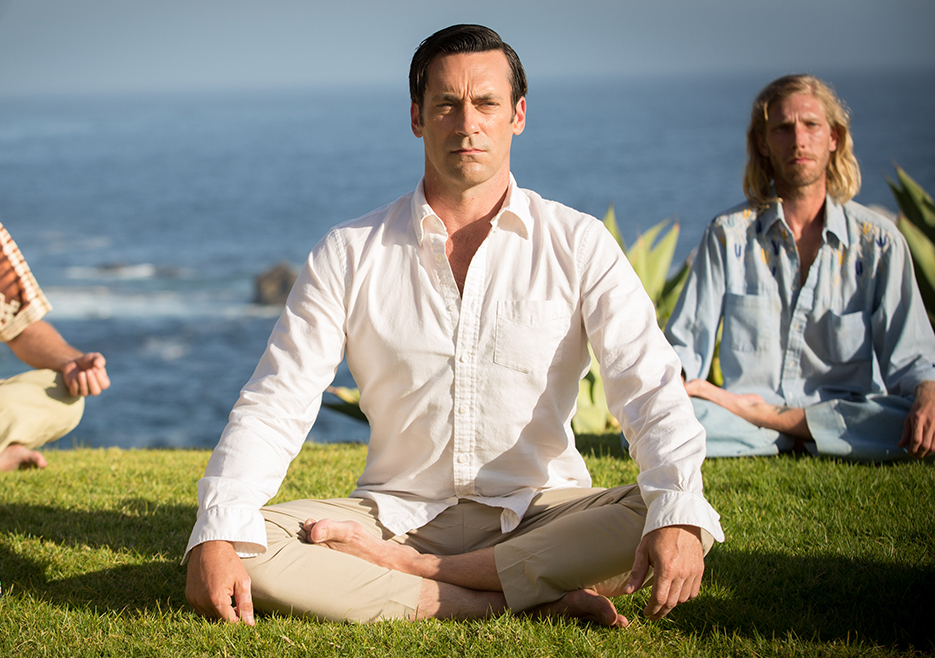
Don’s road trip finally takes him to the West Coast. After getting his ass kicked by fellow vets in Kansas, and giving away his car to a stranger, Don gets to enjoy himself a bit racing cars in the Utah desert. That doesn’t last very long. After Sally tells him about Betty’s cancer, Don calls Betty and tells her he’s coming home and says, “The kids need me,” Betty he insists that he not do that saying, “I want to keep things as normal as possible and you not being here  is part of that.” That hits Don hard and they share a deep and moving emotional moment as Don tears up. Don’s race car buddies drive him to Los Angeles where he drops in on Stephanie. Don tells her he’s retired and gives her Anna’s ring. Don asks about her son and finds out that he lives with his dad. It’s obvious they both are suffering so Stephanie invites Don to join her on a retreat at the Esalen Institute in Big Sur. At the retreat, both Don and Stephanie have powerful emotional introspections in group therapy discussions. After Stephanie leaves Don appears to be on the verge of a suicidal breakdown and makes his “goodbye’ call to Peggy. A therapist convinces Don to attend one more session. After hearing a group participant, Leonard, reveal his emotional cleansing about his insignificance and no one caring that he’s gone, Don is moved. He hugs Leonard and cries with him. Don finally “gets it”. He has found his enlightenment. The next morning, Don blissfully sits in a lotus position with fellow attendees chanting an “om” mantra. Don, eyes closed, smiles contentedly. A bell chimes and the famous 1971 “Hilltop” Coke commercial plays: “I’d like to teach the world to sing in perfect harmony…”
What’s Next?
This brilliant ending opens the door to speculation about different enlightened paths Don could take. Here’s mine. Don will heed the words of the yogi, “The new day brings new hope. Lives we’ve led, the lives we’ve yet to lead. New day, new ideas, new you.” The prodigal son is welcomed back to McCann-Erickson and Jim Hobart finally gets to appoint Don as the creative director on Coca Cola. With his new found wisdom and enlightenment, Don taps into the mindset of the ’70s “Me” generation and makes the most of that one magic moment at Big Sur. It the inspiration for creating the commercial that helps define a generation and earns Don Draper a place in the Advertising Hall of Fame alongside Bert Cooper. Peggy is thrilled about the return of her mentor and Don plays father of the bride at her wedding. Roger gets his ‘playmate” back and the fun continues. Holloway-Harris produces “Hilltop” and puts Joan in the major leagues of production companies. Don rehires Meredith. Finally, Don deepens his bond with Sally and eases his way back into lives of his kids. He never remarries. Too perfect? Perhaps, but that’s my vision, and I’m sticking with it. Now, for a dose of reality, this is how Coke’s Hilltop commercial actually came about.
“Hilltop” — The Real Story.
The brilliance of using the “Hilltop” commercial as the final scene is that it is truly an iconic commercial that was actually created at McCann-Erickson in 1971 by an advertising Hall of Fame creative director, Bill Backer. The circumstances under which “Hilltop” was conceived are far from the idyllic, awakening moment at Big Sur. In a recent New York Times article Mr. Backer reveals that the idea for the jingle came when he and a colleague and a plane full of other passengers were grounded at Shannon airport in Ireland. This excerpt from the article captures the moment very well.
“The next day, Mr. Backer said, he observed some of the passengers — “all types, ages, sexes,” he recalled — in the airport, talking and sharing bottles of warm Coca-Cola. Their frustration seemed to have dissipated. It was then, he said, that the now famous jingle came to him. On a napkin, he scribbled, “I’d like to buy the world a Coke and keep it company.”
The commercial started as a radio jingle and was then transformed into the award-winning classic. “Hilltop” was shot in Tuscany, Italy under the direction of Bill Backer and McCann art director Harvey Gabor. Coke had a continued presence throughout Mad Men starting with Betty’s modeling for their ad through to “Hilltop.” Interestingly, Coke did not pay any product placement fees. When asked about the use of “Hilltop” in a recent interview, Coke CMO, Wendy Clark, said “No money changed hands…we had no idea of the story line.”
Now, thanks to Google, Mad Men fans can see how Don Draper might have envisioned and delivered “Hilltop ” in today’s digital age. Google’s Project Re:Brief pairs the creators of iconic advertising from theMad Men days with Google’s creative teams to reimagine their work. Google selected “Hilltop” and enlisted one of the creators, McCann art director Harvey Gabor, to inspire the Google team. Their re-imagination of Hilltop is amazing. Here’s a link. You will love it.

Finally, a big thanks to Matthew Weiner and a fabulous cast for providing seven seasons of award winning entertainment. Mad Men took me on an artful journey through the early days of my advertising career that I will always remember. For this “real Mad Man”, Mad Men was magical experience.